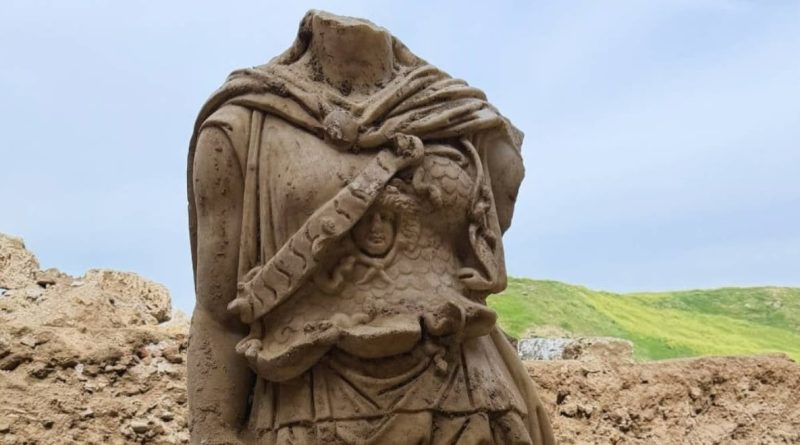
2-Meter Athena Statue Discovered in Laodicea Ancient City
2-Meter Athena Statue Discovered in Laodicea Ancient City has become one of the most exciting archaeological headlines of the year. A remarkable white marble statue of Athena, measuring approximately two meters in height, has been unearthed during ongoing excavations at the ancient city of Laodicea on the Lycus. The discovery was officially announced by Mehmet Nuri Ersoy.
A Major Discovery in Western Theater Excavations
The statue was found during excavation and restoration works at the Western Theater of Laodicea. Archaeologists uncovered the sculpture within rubble fill along the outer wall of the stage building, known as the “postskene.” Interestingly, the statue was discovered lying face down among debris, suggesting it had been deliberately placed or collapsed during ancient times.
Although the head of the statue has not yet been located, the craftsmanship and material—fine white marble—immediately drew attention. Experts believe the statue dates back to the early Imperial period and reflects a high level of artistic skill.
A Glimpse Into Ancient Culture and Art
The Western Theater, dated to the 2nd century BC, is a massive structure featuring a three-story architectural design. Each level contains 16 columns, and between these columns, statues depicting gods, goddesses, rulers, and scenes from epic literature were originally placed.
This discovery further confirms that the theater was not only used for performances but also served as a cultural storytelling space. Scenes inspired by ancient epics attributed to Homer—including Odysseus’ journey, the land of the Laestrygonians, the cave of Polyphemus, and the sea monster Scylla—were part of the visual narrative presented in the structure.
Unique Artistic Details Stand Out
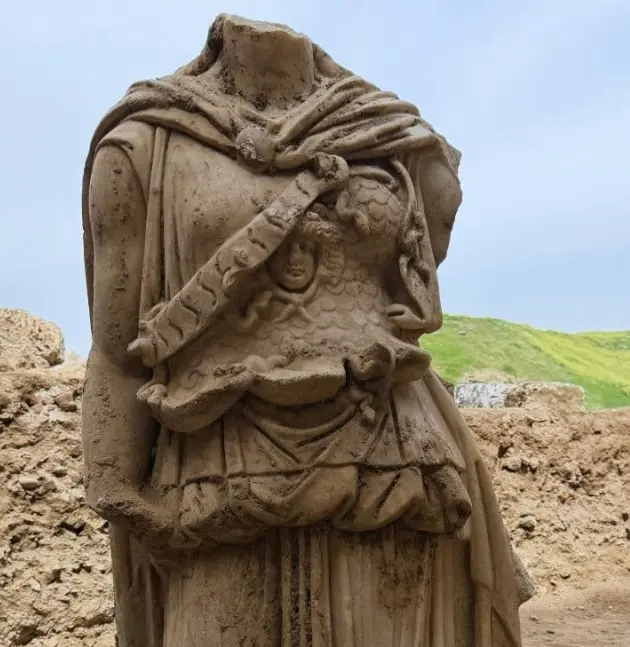
The Athena statue itself is depicted standing on a rounded base. It wears a finely detailed sleeveless peplos garment, along with a cloak draped around the neck. One of the most striking features is the aegis on the chest, decorated with the head of Medusa and intertwined serpents.
The natural folds of the fabric and the delicate carving techniques highlight the exceptional craftsmanship. Archaeologists also noted that the back of the statue was left roughly finished, likely because it was originally positioned between columns and not meant to be viewed from behind.
Another unique aspect is the cloak detail around the neck, which is considered rare in known Athena sculptures, increasing the artifact’s historical and artistic value.
Dating Back to the Augustus Era
From an artistic perspective, the statue reflects the classical style of the Augustan Period. This era is known for its refined artistic expression and revival of classical Greek aesthetics under Roman influence.
Minister Ersoy emphasized that this discovery is part of a broader vision to preserve cultural heritage and pass it on to future generations. The ongoing excavations in Laodicea continue to provide valuable insights into ancient civilizations and their artistic achievements.
Excavations Continue Without Interruption
Restoration and excavation works at the Western Theater have been ongoing continuously since early 2026. Archaeologists expect that further findings may emerge as the project progresses, potentially uncovering additional statues or missing parts of the Athena sculpture.
This latest discovery reinforces the importance of Laodicea as one of the most significant archaeological sites in Turkey, offering a deeper understanding of ancient art, culture, and storytelling.